
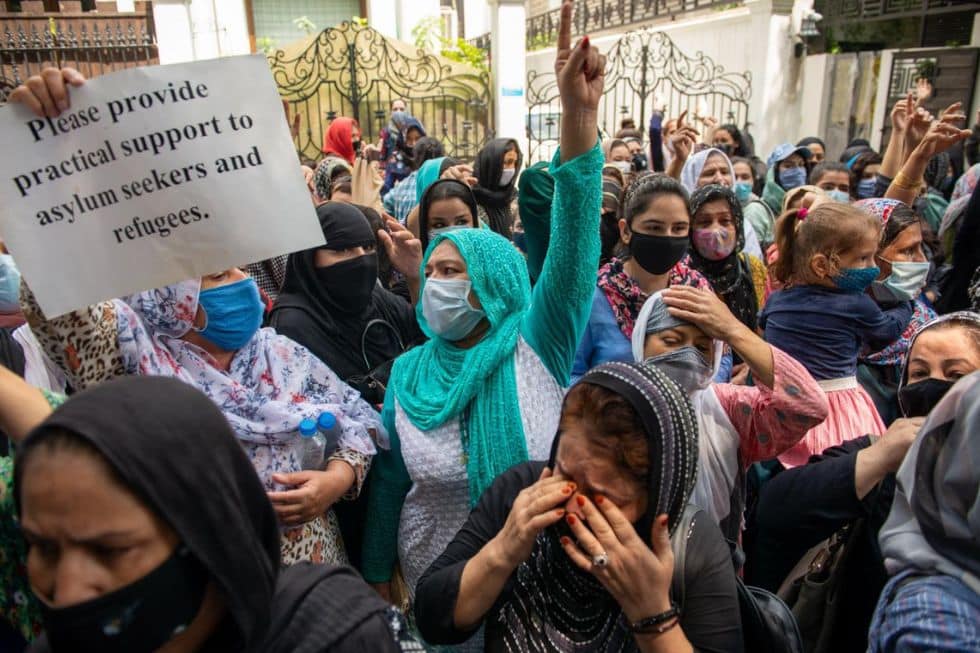
When India enacted the Citizenship Amendment Act (CAA) in 2019, it triggered intense debate both domestically and internationally. Critics questioned whether excluding Muslim refugees aligned with constitutional guarantees of equality and personal liberty. Combined with discussions around a National Register of Citizens (NRC), fears emerged that undocumented minorities—many of them economically poor and native-born—could face detention, loss of rights or deportation.
Five years later, however, those worst-case scenarios have not unfolded. India has not witnessed mass detention camps, large-scale disenfranchisement or deportation drives comparable to those carried out in the United States or parts of Europe. While concerns remain, outcomes have been far more limited than initially predicted.
What the CAA Actually Does
India does not have a formal asylum law and is not a party to the 1951 Refugee Convention. The CAA provides a fast-track to citizenship for non-Muslim minorities from Pakistan, Bangladesh and Afghanistan. Ethically, the law remains controversial for excluding Muslims, including persecuted groups such as Ahmadis, Shias and Hazaras.
The law also does not account for other vulnerable populations, including atheists, LGBTQ+ individuals, political dissidents, Uyghurs from China or persecuted minorities from Myanmar. Legal experts argue that expanding the CAA to include such groups would bring it closer to India’s constitutional principles of equality and non-discrimination.
Despite criticism, the CAA appears less an ideological project and more a reactive policy shaped by decades of undocumented migration pressures, especially from Bangladesh. Like much of India’s immigration governance, it reflects administrative constraints rather than a comprehensive asylum vision.
India’s Historical Role as a Refugee Host
India has a long record of absorbing displaced populations. During the 1971 Bangladesh Liberation War, it sheltered nearly ten million refugees. Over subsequent decades, millions of Bangladeshi Hindus migrated to India, many of whom still reside there today.
India also hosts large refugee communities, including Tibetans, Sri Lankan Tamils, Afghans and Myanmar nationals. High-profile individuals such as the Dalai Lama, author Taslima Nasreen and singer Adnan Sami have lived or settled in India, often without sustained international assistance.
Notably, data from the UNHCR and Western asylum systems show negligible numbers of Indian Muslims seeking refugee status abroad, challenging claims of systemic religious persecution driving mass flight.
Global Comparisons and Media Scrutiny
Despite this record, India frequently faces disproportionate international criticism. Recent media reports have portrayed Indian deportations in highly charged terms, even when similar or harsher practices exist elsewhere. Thousands of migrants have died attempting to cross into Europe, while the US, EU and Australia continue large-scale deportations and offshore detention programs.
India has deported small numbers of Rohingya refugees and regularly pushes back undocumented Bangladeshi migrants, often without formal legal proceedings—raising legitimate due process concerns. However, the scale remains far lower than deportation regimes in many developed democracies.
Security agencies also cite growing militant and narcotics activity linked to Rohingya camps in Bangladesh, complicating what is both a humanitarian and regional security challenge.
The Need for a Better Refugee Framework
India’s refugee response remains fragmented and inconsistent. Policy experts suggest adopting clearer legal standards, including risk-based protection models or an independent asylum authority to improve transparency and fairness.
Like many democracies, India struggles to balance humanitarian obligations, national security and administrative capacity. While exclusionary rhetoric and enforcement excesses do exist, the overall picture is more complex than often portrayed. The CAA highlights the urgent need for reform—but it also demonstrates that dire predictions have not become reality.